Nature Notes
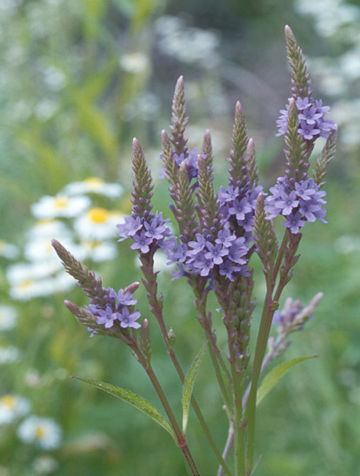
PHOTO COURTESY OF GARRY KESSLER
Our native blue vervain (Verbena hastata) is a wildflower of moist areas.
September 10, 2026
NATURE NOTES
By Annie Reid
Westborough Community Land Trust
Blue Vervain among Fall Wildflowers
Do you think of September as late summer or early fall? Either way, wildflower season is not yet over. It’s a good time to spot wildflowers that you might not have noticed recently, such as our native blue vervain (Verbena hastata), a wildflower of moist areas. Following a summer with regular rains, this September seems better for blue vervain than the past couple of years were, with their summer droughts and scorching heat.
Blue vervain grows tall, 2 - 6 feet. Look for the thin, clustered blue-purple spires of blue vervain among or poking above the blossoms of classic fall wildflowers. Those flowers would include moisture- loving joe-pye weed, boneset, jewelweed, even invasive purple loosestrife, and some goldenrods and asters. Places to look are sunny shorelines, marshes, damp meadows and fields. Don’t forget smaller sites such as roadside ditches and local drainage basins. Check rain gardens and butterfly gardens.
Blue vervain blooms July through September. Small five-petaled tubular flowers start blooming at the bottom of the spires. Then the blossoming gradually moves up. Seeds develop below the flowers, and buds form above them. The perennial plants spread both by seed and by the rhizome (horizontal underground stem), which buds in fall and sprouts in spring. The plants have long, lance-shaped leaves that grow opposite one another.
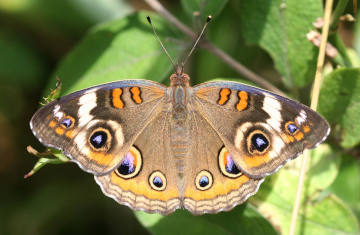
PHOTO COURTESY OF GARRY KESSLER
Blue vervain is one of the host plants for caterpillars of the common buckeye butterfly (Junonia coenia).
As a native wildflower, blue vervain has a long history with the wildlife around it. Bumblebees, honeybees, and butterflies pollinate it. Watch for hummingbirds, which come for nectar. Many birds eat the seeds. Visitors include swamp sparrows, cardinals, juncos, song sparrows, American tree sparrows, and white-throated sparrows. Rabbits might nibble the leaves, but the plants contain bitter substances (iridoid glycosides) that discourage deer and other animals from feeding. Yet blue vervain is a host plant for caterpillars of the common buckeye butterfly (Junonia coenia) and the verbena moth (Crambodes talidiformis). They are not deterred from munching the leaves in spring.
What about human uses for blue vervain? They go back thousands of years if you count the religious, medicinal, and superstitious uses for a close relative, European vervain (Verbena officinalis). This plant now also grows in the U.S. including Massachusetts, and in other places around the world. According to lore, this relative was used by Druids, Roman priests, and in Jewish and early Christian ceremonies. In the Middle Ages, European vervain had medicinal uses and was also supposedly used in witches’ brews.
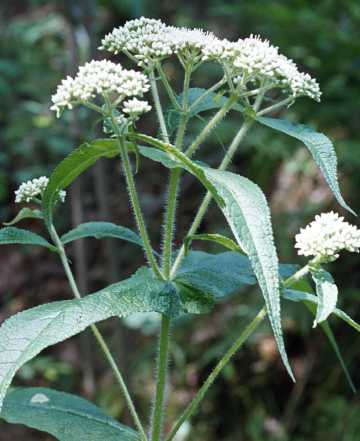
PHOTO COURTESY OF GARRY KESSLER
Boneset (Eupatorium perfoliatum) grows in the same environments as blue vervain. Both plants served as folk remedies for colds, coughs, and more in the past.
Getting back to North America, it’s no surprise that the leaves and roots of our native blue vervain (Verbena hastata) have a history of use by Native Americans, colonists, and settlers in traditional and folk remedies. Blue vervain was used for colds, fevers, coughs, stomach and intestinal problems, women’s discomforts, insomnia, and even as a tranquilizer. The plant has sometimes provided food. After soaking in changes of cold water (to reduce bitterness), the seeds have been roasted and ground into flour.
This fall, enjoy spotting blue vervain in wet areas, along with other wildflowers that add beauty to the season. Appreciate blue vervain’s role in the natural world and in history and lore.
Date index
Month (September)
Common name index
Scientific name index
Category index